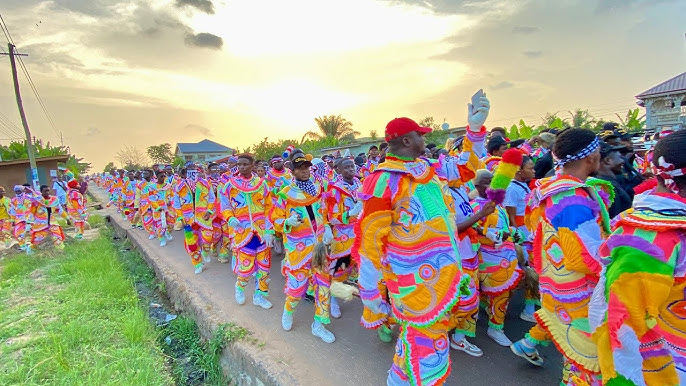
Every year in the twin cities of Sekondi and Takoradi in Ghana’s Western Region, the streets come alive with one of the country’s most spirited cultural celebrations. Locally known as the Ankos Festival or the Takoradi Masquerade Street Carnival, this event has grown into a highlight of the holiday season and a must-see cultural experience for locals and visitors alike.
Held around Christmas and New Year’s Day, the festival typically spans from late December into early January. During this period, more than 30 masquerade groups take to the main streets, parading through crowds of cheering onlookers dressed in elaborate and imaginative costumes.
What makes this festival so compelling is the creativity and community participation behind it. Masquerade groups, often called “Ankos”, spend months preparing intricate outfits and choreography. These costumes mix traditional motifs with contemporary flair and are usually revealed for the first time when the parade begins.
The festival is more than just a parade. There’s music, dance, rivalry, and storytelling in every movement. Brass bands, drumming ensembles, and vocal performances set the soundtrack for the procession, while dancers bring energy that draws in spectators of all ages to join the celebration.
The cultural roots of the Ankos Festival run deep. Scholarly and local accounts trace the tradition back to early 20th-century influences, where masquerade performance blended local customs with playful reinterpretations of colonial and maritime themes, reflecting the port city’s history and diverse social fabric.
Why It Matters Today
At its heart, this festival preserves and amplifies cultural identity. It’s a living tradition that connects generations, with elders passing down artistic techniques and young people putting their own stamp on the practice. The event also provides a moment for families and diasporans to return home and reconnect with their heritage during the holiday season.
In recent years, the festival has drawn economic and tourism interest. Local businesses, artisans, hotels, and food vendors benefit from the influx of visitors, while newer events like MasqFiesta tie the masquerade tradition to broader cultural and entertainment programming in early December, drawing even more attention to the region’s creative vibrancy.
Ultimately, the Masquerade Festival in Sekondi-Takoradi is about unity and celebration. It’s a moment when history and modern expression meet, bringing communities together to honor the past while boldly dancing into the future.

General Post