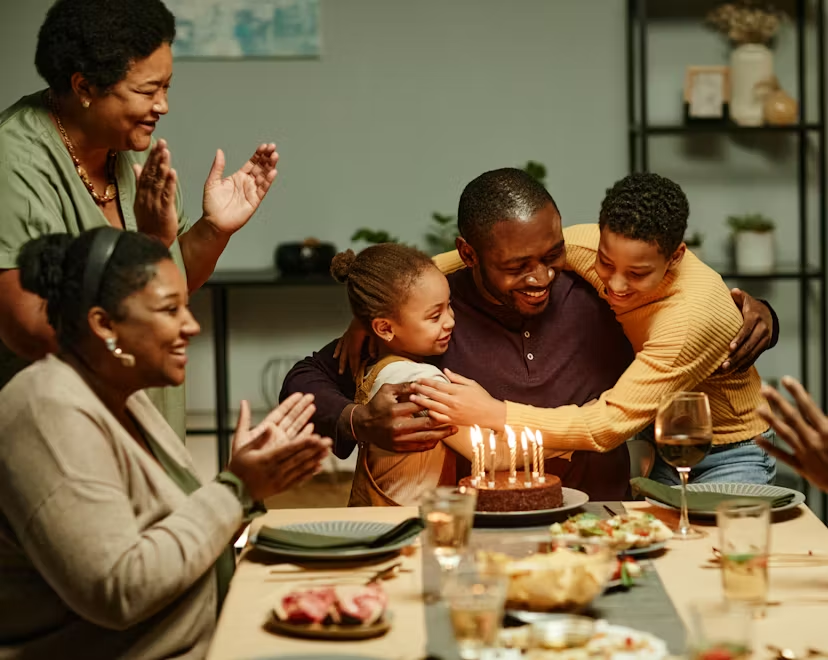
Every family carries its own set of traditions. Some are loud and joyful, others quiet and deeply personal. They may show up as a special recipe cooked only during festivals, a naming ritual observed with care, a song sung to children at bedtime, or a ceremony performed exactly as it was taught by an elder long ago. These traditions are more than habits. They are the threads that weave together a family’s identity.
For many families, these practices are passed down informally. Children learn by watching, listening, and participating. A grandmother teaches a recipe by cooking alongside her grandchildren. An uncle explains the meaning behind a ceremony while preparing for it. Over time, these moments shape a shared understanding of who the family is and where it comes from.
But as families become more dispersed and elders pass on, these traditions are increasingly at risk. Migration, busy schedules, and changing lifestyles often mean fewer opportunities to gather and pass on knowledge in the ways previous generations did. When the person who held the story or knew the details is gone, a tradition can disappear quietly, without anyone realizing what has been lost.
This is why documenting family traditions matters. Writing down how your family celebrates important moments, recording the steps of a treasured recipe, or explaining the meaning behind a ceremony turns fragile memory into something lasting. It gives future generations a reference point, not just for what to do, but for why it matters.
Preservation does not mean freezing traditions in time. Families evolve, and practices naturally adapt. What documentation does is provide continuity. It allows younger generations to understand the roots of what they inherit and to carry those traditions forward in ways that still feel relevant to their lives.
HeritageTree Africa supports this process by giving families a space to record and organize their traditions, stories, and practices. Instead of relying on memory alone, families can create a living archive that grows over time. One generation adds their knowledge, the next builds on it, and the connection remains intact even across distance.
At its core, preserving family traditions is an act of care. It says that the stories, rituals, and values passed down to us are worth holding onto. By choosing to document them today, we give future generations the gift of knowing who they are, where they come from, and the traditions that shaped them.

General Post