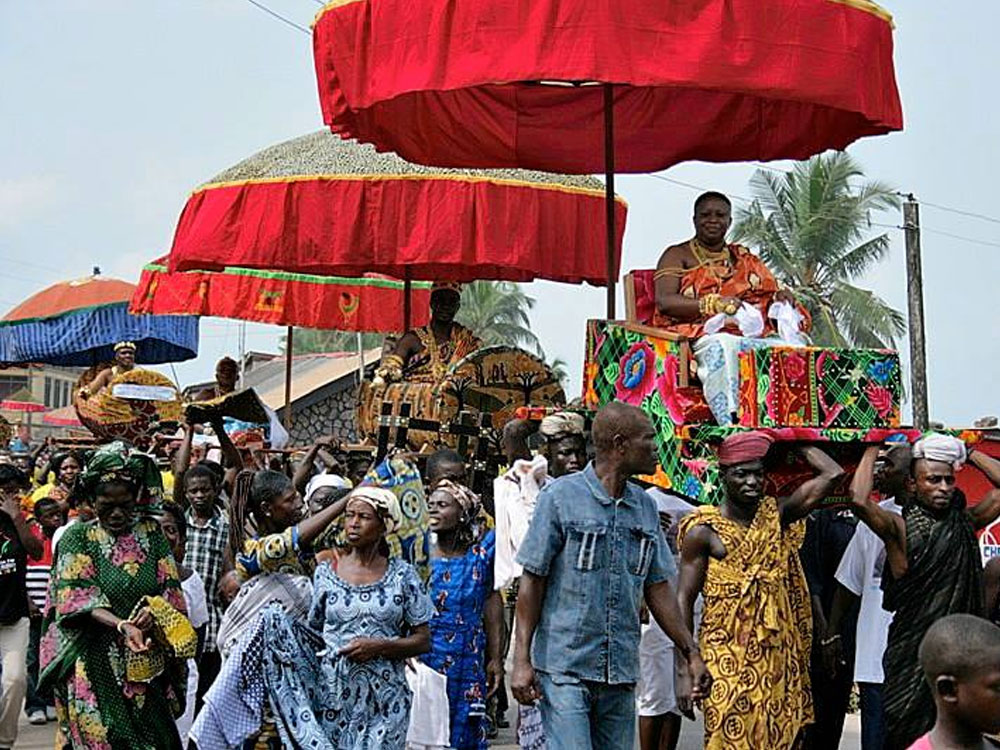
The Odwira Festival, celebrated by the Akuapem people, is one of Ghana’s most meaningful cultural observances. It is a time set aside for purification, renewal, and reflection, bringing families and communities together to honor their ancestors and reaffirm shared values. More than a festival, Odwira is a moment of reset, both spiritually and socially.
Traditionally held in towns such as **Akropong, Aburi, Larteh, and Mamfe**, Odwira marks the end of the old year and the beginning of a new cycle. Families return home during this period, making it one of the most important times for reunions within the Akuapem state. Homes fill with relatives, elders receive visitors, and conversations stretch late into the night as stories and memories are shared.
Central to Odwira are rituals of purification and thanksgiving. These rites acknowledge the guidance and protection of ancestors while seeking blessings for the year ahead. Families participate together, reinforcing the idea that spiritual well-being is a collective responsibility. Elders lead these traditions, while younger generations observe, learn, and gradually take on roles of their own.
Food plays a significant role during the festival. Special meals are prepared and shared, often beginning within the household before extending to neighbors and visitors. These shared meals symbolize unity, gratitude, and abundance. Cooking together becomes another way families pass down knowledge, techniques, and cultural meaning that go beyond the ingredients themselves.
Odwira is also a celebration of culture in motion. Drumming, dancing, and traditional performances bring color and energy to the festivities. Chiefs and queen mothers appear in full regalia, reminding everyone of the structures and traditions that have guided Akuapem society for generations. For children and young people, these displays are not just entertainment. They are lessons in identity and belonging.
What makes Odwira especially powerful is its emphasis on continuity. The festival reminds families that they are part of something larger than themselves, a living cultural tapestry shaped by ancestors and sustained through collective effort. It reinforces the idea that preserving traditions is not about resisting change, but about carrying forward values that give meaning to progress.
At its core, Odwira is a celebration of family bonds. It brings people back to their roots, strengthens relationships, and renews a shared commitment to culture and community. Through rituals, gatherings, and shared experiences, the festival ensures that Akuapem heritage remains vibrant, relevant, and deeply connected to the families who carry it forward.

General Post